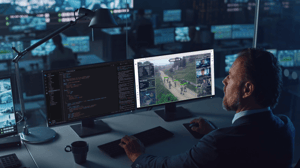
Most teams think of AI analysis as a post-session task: record the video, export the file, upload it to a separate AI service, and wait for results. But what if intelligence could flow during the live session itself? Eyeson's AI forwarding capability challenges that assumption by routing live video and audio streams directly to AI systems in real time, transforming passive recordings into active, intelligent workflows.
What is AI Forwarding?
AI forwarding is the ability to stream video and audio from live Eyeson sessions to external AI systems, rather than processing it later. Using WebRTC technology, streams flow continuously to AI services, whether cloud-based models such as Vision Language Models and speech-to-text engines, or edge-deployed AI running on local hardware. The AI processes the stream and returns insights immediately, while the live session continues uninterrupted.
The Advantages of AI Forwarding
- Real-Time Insights: Analysis happens instantly as media is streamed, rather than hours later. Participants and operators get immediate feedback on what the AI detects, whether objects in a visual stream, characteristics of speech, or transcriptions of spoken dialogue.
- No Extract-Upload-Process Cycle: Eliminating the need to export recordings, manage files, and wait for batch processing allows intelligence to become part of the live workflow. What can take minutes in traditional pipelines happens continuously within the platform.
- Works with Any AI Service: Forward media to industry-standard cloud AI, such as OpenAI's Whisper for transcription or Vision Language Models for visual analysis, as well as custom endpoints or edge models running locally on devices such as NVIDIA hardware. The architecture remains under your control.
- Enables Autonomous Operations: For specialized use cases such as drone feeds or camera monitoring, forwarding lets AI analyze live media and trigger decisions without requiring a human intermediary. Security operations, remote inspections, and autonomous monitoring can all be built around the same live media pipeline.
AI Forwarding in Practice
Organizations can use this capability in a range of workflows. Live sessions can be automatically transcribed and captioned for accessibility. Compliance systems can process analytics alongside recorded media to support audit trails. Drone operators can send live feeds through AI systems for object detection during missions. Customer support workflows can analyze speech for sentiment and intent in real time to support operators. The common thread is that intelligence becomes part of the live media workflow rather than an afterthought.
Conclusion
AI forwarding represents a shift in how video platforms can integrate intelligence. By making AI analysis part of the live media pipeline, Eyeson connects live video and audio directly with AI systems instead of relying on a separate, manual processing step. Whether you're building accessibility features, automating compliance, analyzing camera feeds, or enabling autonomous operations, real-time forwarding removes the barrier between raw media and actionable insight.